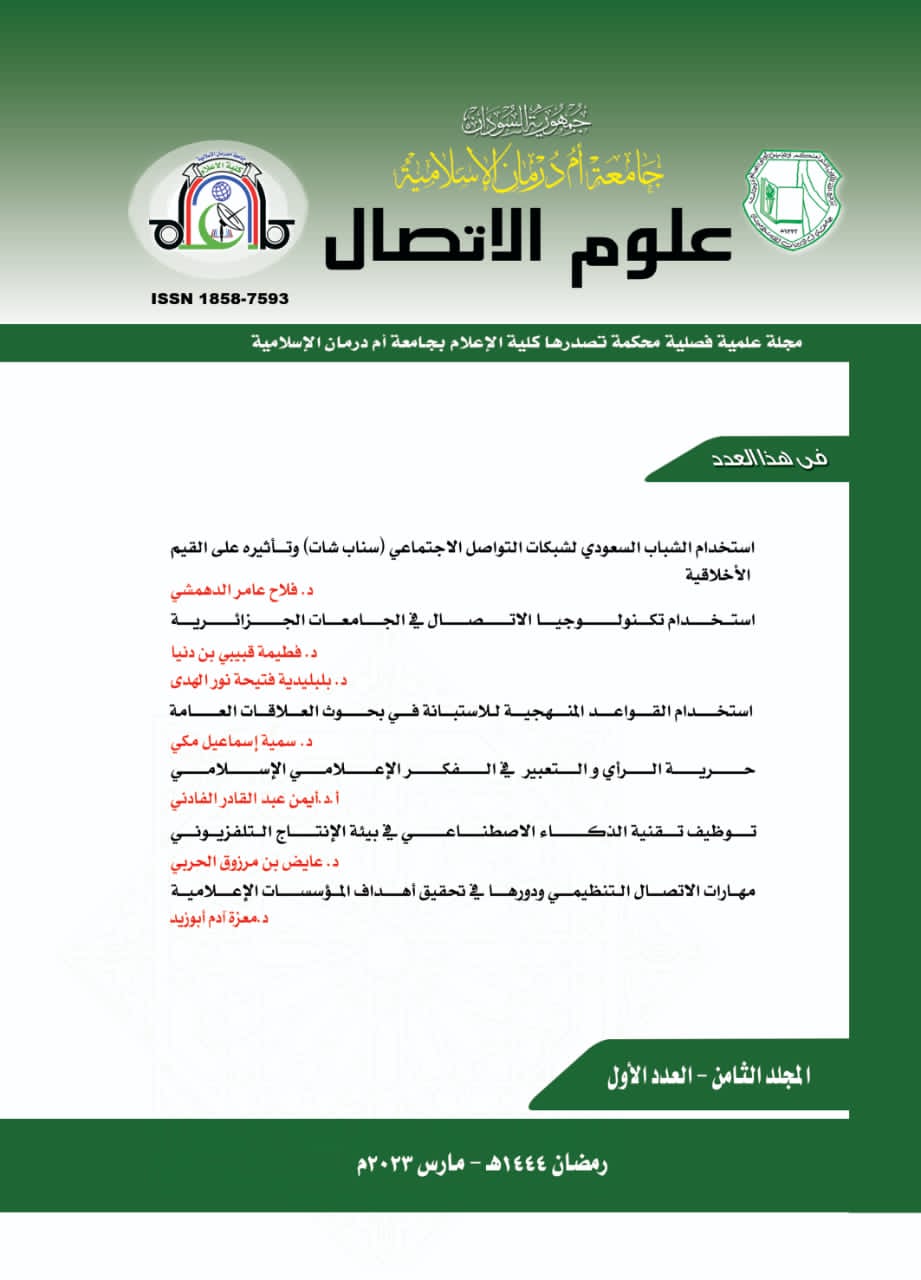
Implementing artificial intelligence technology in the Television production environment.
(Descriptive study applied on a sample of Employees of Arab Satellite Channels 2022)
Abstract
The television production industry has evolved dramatically in recent era, the AI technology is one the manifestations of technical development. This study sought to identify the extent which Artificial Intelligence technology is used in the Arab television production environment and to measure its ability to deal with these technologies. Thorough and in-depth interviews in Saudi channel 1's AI technologies Abu Dhabi television, Saudi news channel, Algiers beur TV channel, Al-arbya channel, Alsharq Bloomberg channel, Dubai channel.
The acquired findings revealed that the Arab media environment is equipped to enable AI technologies at the level of financial capacity to adopt technical capabilities to use, however, the empowerment of this technology at the actual level and in the near perspective seems to be somewhat unlikely. The prevailing institutional culture in TV production which is based entirely on the human component in display and operation, the identification of responsibilities and the traditional dimension of management make it difficult to create administrative, creative and institutional environment that allows for accelerated steps towards enabling technology effectively and efficiently.
References
- أوسوبا، أوسونديهوويلسر وليام (2018). ذكاء اصطناعى بملامح بشرية – مخاطر التحيز والأخطاء فى الذكاء الاصطناعى. مؤسسة راند.
- البياتي، ياس خضير(2018). مستقبل الذكاء الإصطناعي في الإعلام .موقع صحيفة الزمانhttps://www.azzaman.com, seen on 15/4/2021 /
- الحاج، كمال (2020). نظريات الإعلام والاتصال. سوريا: الجامعة الافتراضية السورية.
- الشيخ، محمد (2014). تحديات استخدام التقنية الرقمية في الإنتاج التلفزيونى: تلفزيون السودان أنموذجاً. مجلة بحرى للآداب والعلوم الإنسانية، العدد 3.
- العزة،مالك (2017). استخدام التقنيات التلفزيونية الحديثة وتأثيرها على زيادة متابعة مشاهدة البرامج الإخبارية في التلفزيون الأردني. رسالة ماجستير غير منشورة. جامعة الشرق الأوسط، الأردن.
- النجار، فايز جمعة (2010). نظم المعلومات الإدارية (ط3). دار حامد للنشر والتوزيع.
- اللبان، شريف درويش (2019). مداخل جديدة لتطوير صناعة المحتوى الصحفي. المركز العربى للبحوث والدراساتhttp://www.acrseg.org/41440, seen on 2/3/2022
- الورقلى، شيهان (2019). تأثير المذيع الروبوت على مهنة الإعلامى: دراسة تحليلية سيميولوجية على عينة من النشرات الإخبارية. رسالة ماجستير غير منشورة. جامعة قاصدى مرباح- ورقلة، الجزائر.
- باديس، خديجة (2015). تكنولوجيا الإعلام الحديثة ودورها في تطوير الأداء الإعلامى محطة قسنطينة الجهوية للتلفزيون أنموذجاً. رسالة ماجستير غير منشورة. جامعة العربى بن مهيدى أم البواقى، الجزائر.
- جانفسكي، توني (2018). الاتجاهات والتقنيات الناشئة في تكنولوجيا المعلومات والاتصالات وتحديات بناء القدرات. الاتحاد الدولي للاتصالات https://www.arabdevelopmentportal.com/sites/default/files/publication/ict-ar.pdf
- حسين، سمير (1995). بحوث الإعلام – الأسس والمبادئ (ط2). مصر: عالم الكتب.
- حرب، غسان (2022). رؤية استشرافية لتبني تقنيات الذكاء الاصطناعي في القنوات الفضائية الفلسطينية. المجلة الجزائرية للاتصال، 24 (1)، 8-29.
- خالد، منصر (2019). التلفزيون في عصر الإعلام الجديد. مجلة الرسالة للدراسات الإعلامية، 3(1)، 66-76.
- درويش، محمود (2018). مناهج البحث في العلوم الإنسانية. مصر: مؤسسة الأمة العربية للنشر والتوزيع.
- سكاى نيوز (2019). الصين تكشف عن أول "مذيعة روبوت
https://www.skynewsarabia.com, seen on 2/3/2022/
- سلامة، صفات و أبوقورة، خليل (2014). تحديات عصرالروبوتات وأخلاقياته. دراسات استراتيجية، العدد 196، مركز الإمارات للدراسات والبحوث الاستراتيجية .
- عبدالحميد، عمرو (2020). تقبل طلاب الإعلام في مصر والإمارات لتطبيقات الذكاء الاصطناعى وتأثيرها على مستقبلهم الوظيفى- دراسة في إطار نموذج قبول التكنولوجيا. المجلة المصرية لبحوث الرأي العام، 19(2)، 341-409.
- عثامنية، أمينة (2019). المفاهيم الأساسية للذكاء الاصطناعى- كتاب جماعي بعنوان: تطبيقات الذكاء الاصطناعي كتوجه حديث لتعزيز تنافسية منظمات الاعمال. المركز الديمقراطي العربي للدراسات الاستراتيجية والسياسية والاقتصادية.
- عبد الظاهر محمد (2019). صحافة الذكاء الاصطناعي: الثورة الصناعية الرابعة وإعادة هيكلة الإعلام. مصر: دار بدائل للنشر والتوزيع.
-علاونة، مؤمن (2022). استخدام تطبيقات الذكاء الاصطناعي في الإنتاج الإذاعي والتلفزيوني الأردني: دراسة ميدانية. رسالة ماجستير غير منشورة. جامعة اليرموك، كلية الإعلام.
- فسفكس، إلياس (2019). الثورة الصناعية الرابعة حليف أم عدو الوظائف. مجلة صدى الموارد البشرية، العدد10.
- قمورة، سامية شهيى ومحمد، باى، وكروش، حيزية (2018، نوفمبر، 26-27). الذكاء الاصطناعي بين الواقع والمأمول-دراسة تقنية وميدانية. الملتقى الدولى "الذكاء الاصطناعي: تحد جديد للقانون؟". الجزائر.
- مدكور، مليكة (2020). مستقبل الإنسانية فى ضوء مشاريع الذكاء الاصطناعي الفائق. مجلة دراسات فى العلوم الإنسانية والاجتماعية،3(1)، 138-166.
- محمد، أمان محمد (2019). الذكاء الاصطناعي ودوره في مستقبل الصحافة والإعلام. موقع جريدة المستقبل العربي اليوم https://arabicfuture.com/news/21876,seen on 3/3/2022
-منصور، ماهر (2018). مذيع الذكاء الاصطناعي يؤسس لتحول كبير في صناعة الإعلام والترفيه. موقع العين الإخبارية https://al-ain.com/article/media-artificial-intelligence-entertainment, seen on 2/3/2022
- موسى، عبدالله، وبلال، أحمد حبيب(2019). الذكاء الاصطناعي – ثورة في تقنيات العصر. المجموعة العربية للتدريب.
- وسار، نوال (2019). تطبيق نظريات الإعلام والاتصال، الفكر الاتصال العربى. لبنان: دارالنهضة العربية.
-Bostrom, Nick &Yudkowsky, Eliezer. (2014). The Ethics of Artificial Intelligence. In Cambridge Handbook of Artificial Intelligence, edited by Keith Frankish and William Ramsey. New York: Cambridge University Press.
-Bremme, Kati. (2019). AI and the media: too hot, too cold, just right? A mapping of Artificial Intelligence applications, mediaroad. European Broadcasting Union https://www.mediaroad.eu/archives/30328, seen on 14/3/2022
-Caramiaux, Baptiste, Lotte, Fabien &Geurts Joost. (2019). AI in the media and creative industries. New European Media (NEM),.1-35.
-Chan-Olmsted, Sylvia M.(2019). A Review of Artificial Intelligence Adoptions in the Media Industry International. Journal on Media Management, 21(3-4), 193-215.
- Cheng, Gong. (2018). Artificial Intelligence in Media Industries, Creating Better User Experiences and Maintaining High Customer Loyalties. MA. Drexel University.
-Coward, Chrism, et al., . (2020). Digital Skills Assessment Guidebook. International Telecommunication Union.
- Luger, George. (2009). Artificial Intelligence: Structures and Strategies for Complex Problem Solving (6th ed.). Addison Wesley Pearson Education
-Derrington, M. (2019). The benefits and challenges of longitudinal qualitative studies. In Qualitative longitudinal methods (pp. 1-12). SAGE Publications
-International Telecommunication Union (ITU). (2019). Artificial intelligence systems for programme production and exchange https://www.itu.int/pub/R-REP-BT.2447-2019, seen on 3/5/2022
- Prabhala, Sasanka& Ganapathy, Subhashini. (2011). Emerging Artificial Intelligence Application:Transforming Television into Smart Television. Management and Communication. Studies in Computational Intelligence,381, 311-318.
-Obozintsev, Lucy. (2018). FromSkyNetTo Siri:AnExploration Of TheNature And Effects Of Media CoverageofArtificial Intelligence. MA. University of Delaware.
-Wu, Fang& Cui, Di. (2018). The influence of media use on public perceptions of artificial intelligence in China: Evidence from an online survey. Information Developmentm 1–13 .
-Yin, R. K. (2003). Case study research: Design and methods. London: Sage